On Saturday 26th April 2026 I attended the Justice In Therapy: Decolonising The Curriculum organised by the amazing organisation that is Black Psychotherapy.
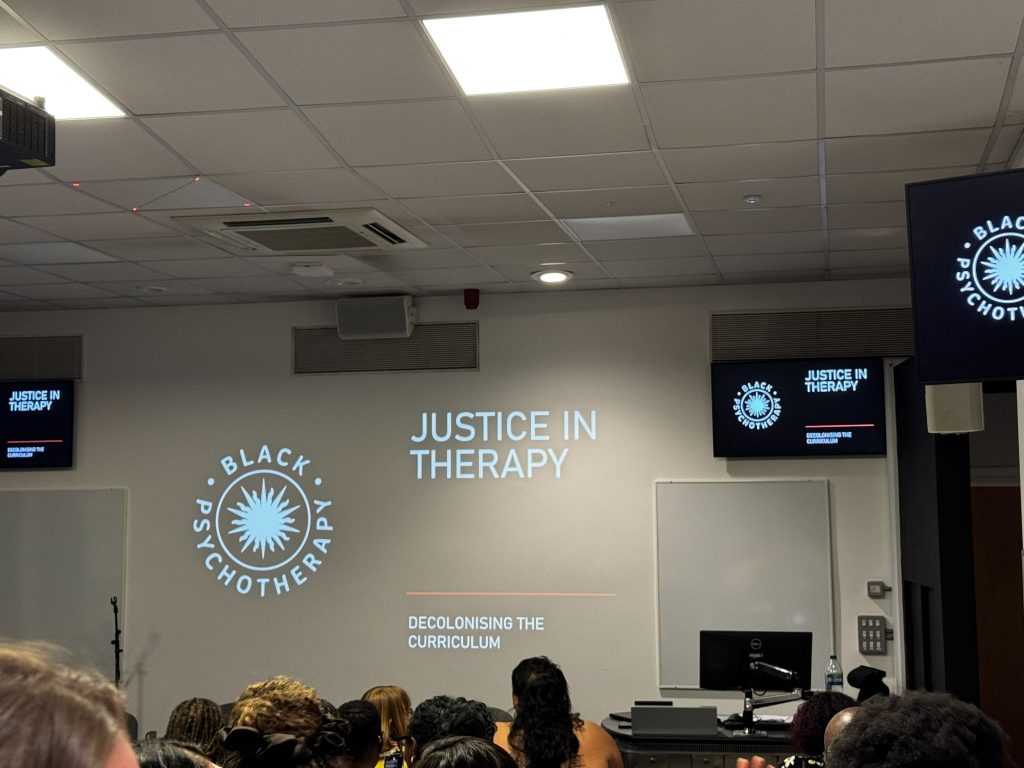
It was so inspiring to see a room full mostly of racialised and marginalised people, as well as allies. It’s so rare to be in a room where you’re not the only, or one of a few, brown faces there. The sense of safety and care I felt was both rare and a really beautiful experience. I also met and connected with some incredible people and really felt a part of the community.
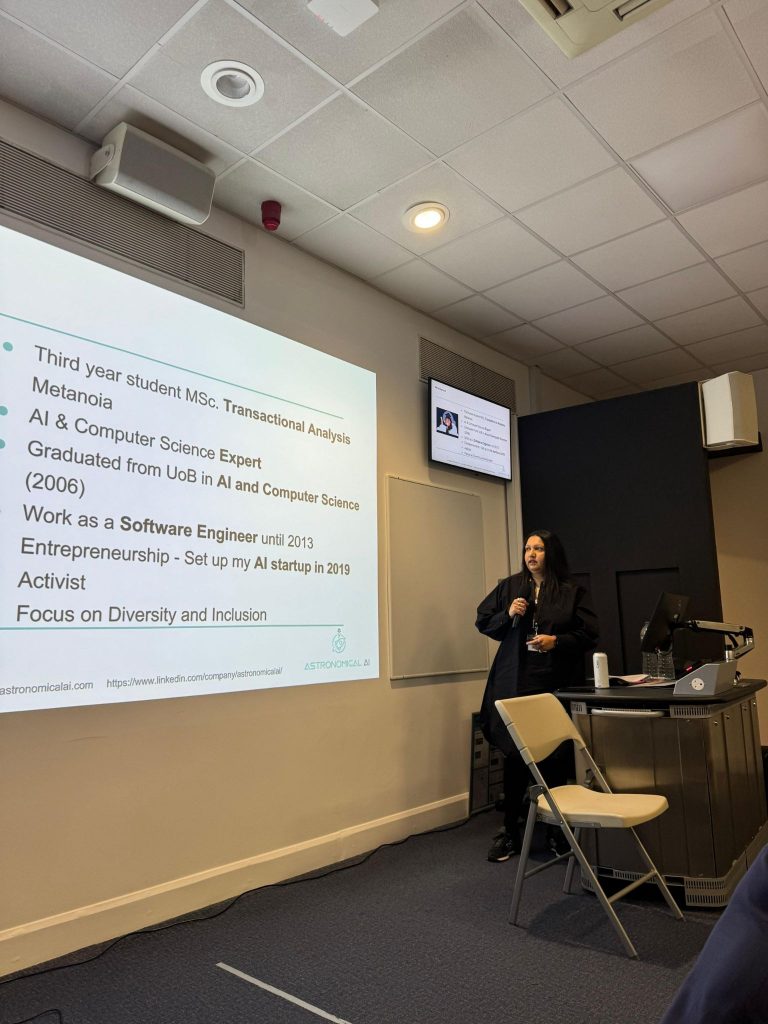
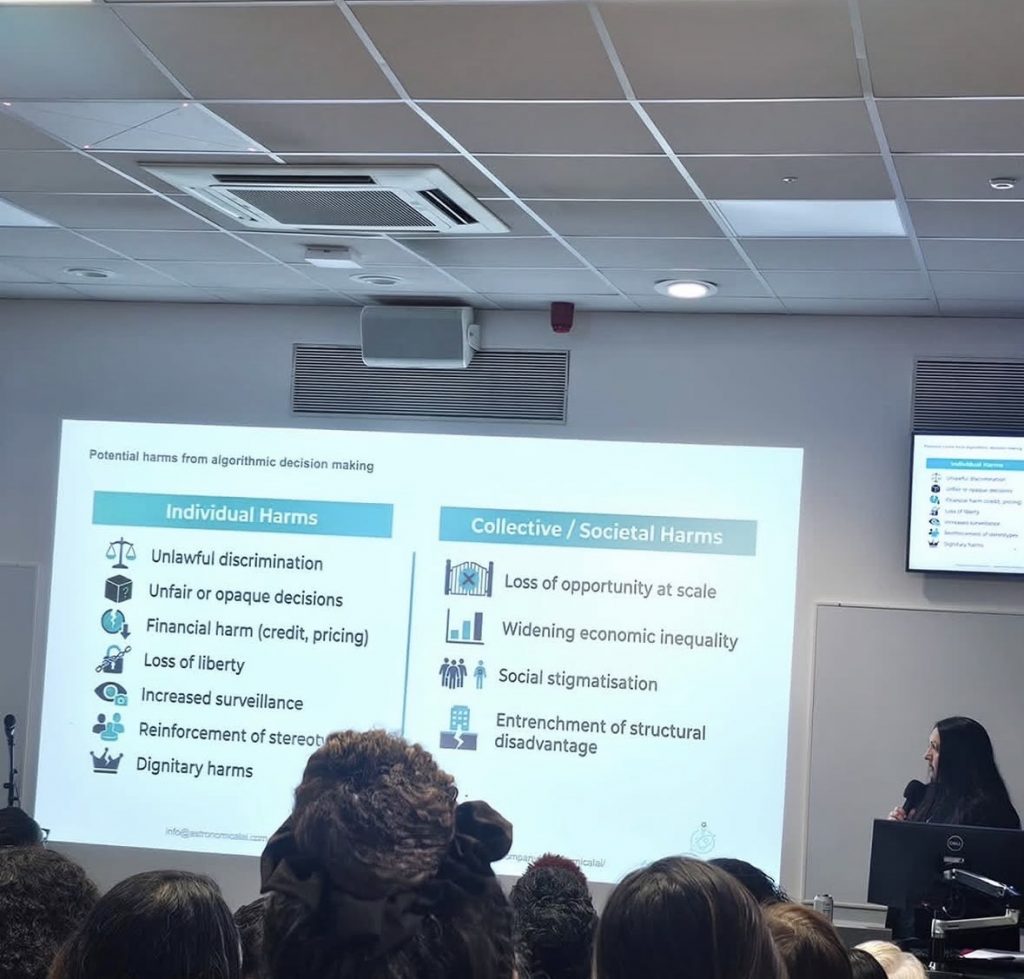
I was invited to speak and deliver my talk Talking with Machines: Making Sense of AI, Bias and Psychotherapy. I’ve delivered this talk three times prior to this event, and in each instance it’s been received with a lot of positivity. What was different in this case, however, is that the topic of my talk resonated with every person in that room, considering the direct impact bias in AI systems would have on them. What was especially moving for me was the round of applause I received when I presented the agentic AI tool that I’ve been developing, which can be used to improve psychotherapy training in a safe, ethical, and inclusive way. The aim of the tool is to help therapists build competence in working with complex relational, cultural, and emotional scenarios, while reducing reliance on real client material. The initial starting point is anti-racism work; using the avatar means you don’t racially traumatise a real person.
I received questions on how I was funding it, to which I responded that I’ve been self-funding through my consultancy work, with two psychotherapists reviewing the synthetic transcripts I am creating. The audience said I should crowdfund and that people would pay, and that I was not alone anymore. I felt extremely moved and humbled by this. For the last six years I have been predominantly in white spaces asking for investment and funding, only to be constantly turned down. So I’ve done what I always do: rely on myself and my own abilities and capabilities to make it happen. To have a group of people saying they wanted to support me felt extremely healing, and I felt so much gratitude and emotion. There was also interest from those who wanted to trial it in their own organisations.
I was also grateful to be the second presentation of the day, as this meant I could relax and enjoy the rest of the conference. There were so many great talks throughout the day, each one unique and moving in their own way.
I attended the workshop run by Eiman Hussein and Anne-Sophie Bammens on ‘When the Institution Harms: Repair Through a Justice Lens’. Given my own experiences, both in educational settings and industry, this was a poignant workshop, and I have so much gratitude for Eiman considering all she has been through.
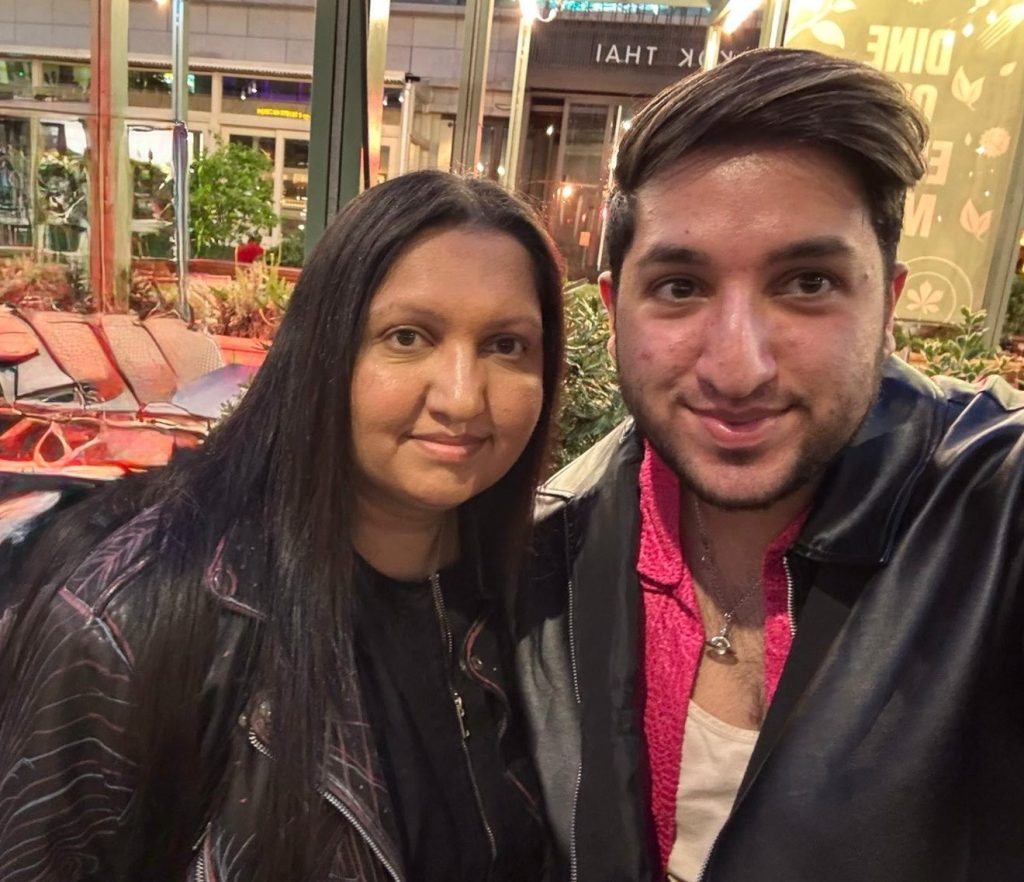
And last, but in fact most important, I felt really supported and cared for by my youngest brother Zane, who came to the conference with me. He too is working in the mental health field, with ambitions of being a clinical psychologist. He gave up his Saturday to attend with me to show support, and that means the world to me.